The future of education is shifting from rote memorization to creative, learner-centered strategies. Visual thinking tools such as doodling, sketchnoting, infographics, and visual metaphors are becoming powerful instructional methods that simplify complex topics, spark creativity, and improve recall. By integrating these methods into modern instructional strategies, teachers can make learning more interactive, stress-free, and effective.
For years, doodling was considered a classroom distraction. Teachers often punished students for doodling, assuming it reflected a lack of focus. However, research now shows that doodling activates the parasympathetic nervous system and stimulates the right side of the brain, the hub of creativity and emotional intelligence.

In instructional design, doodling encourages learners to process information in a playful yet meaningful way. It:
By allowing doodling in classrooms, teachers can inspire students to connect with lessons on a personal and creative level.
Sketchnoting takes doodling a step further by combining text, doodles, icons, and diagrams into a structured visual flow of ideas. It transforms lessons into creative visual stories.
With sketchnoting, learners can:
Sketchnoting doesn’t just keep students attentive—it also gives them a sense of ownership over their learning journey.
One of the most powerful benefits of sketchnoting is that it makes learning easy to digest and recall. Allowing students to experiment with creativity without fear of judgment helps them:
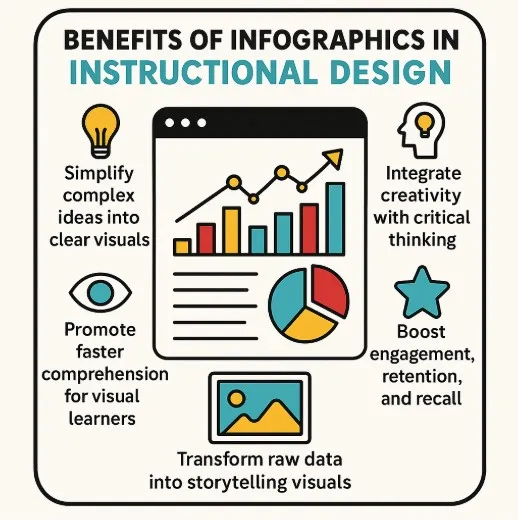
An infographic is a structured visual that blends text, charts, icons, and images to present information clearly and quickly.
When teachers adopt infographics, they provide learners with tools to see knowledge as a narrative rather than just data.
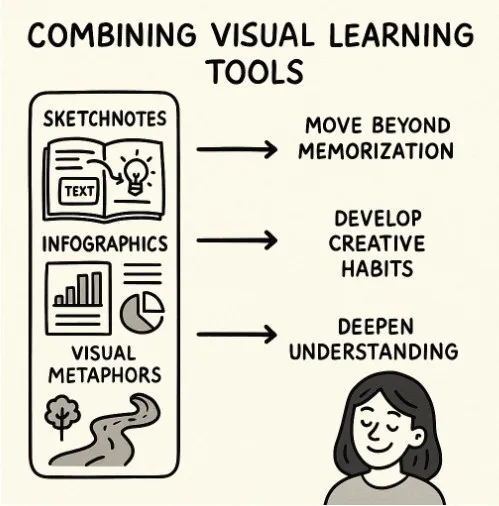
The combination of sketchnoting, infographics, and visual learning strategies creates a dynamic ecosystem of education. Together, they encourage students to:
These tools align with the learning habits of the digital generation, making lessons both engaging and future-ready.
A visual metaphor uses familiar images to represent abstract ideas. For example:
Since the brain processes images faster than text, visual metaphors are highly effective for long-term retention.
Beyond simplifying content, visual learning tools promote personal growth by encouraging:
Ultimately, these strategies nurture independent, confident, and innovative learners capable of leadership.
An instructional strategy is the structured plan a teacher uses to deliver knowledge effectively. It focuses not only on what to teach but also on how to teach it for maximum impact.
Visual learning tools like doodling, infographics, and sketchnoting fit seamlessly into instructional strategies, making lessons:
Today’s instructional strategies focus on creating stress-free learning environments. By blending visual thinking with technology, teachers can design lesson plans that are:
The future of education lies in visual thinking and creative instructional tools. By embracing doodling, sketchnoting, infographics, and metaphors, teachers can nurture curiosity, creativity, and confidence in learners.
This transformation requires a shift in mindset from traditional teaching methods. As education evolves, visual learning—combined with AI and modern instructional strategies—will continue to create confident, innovative, and future-ready students.