
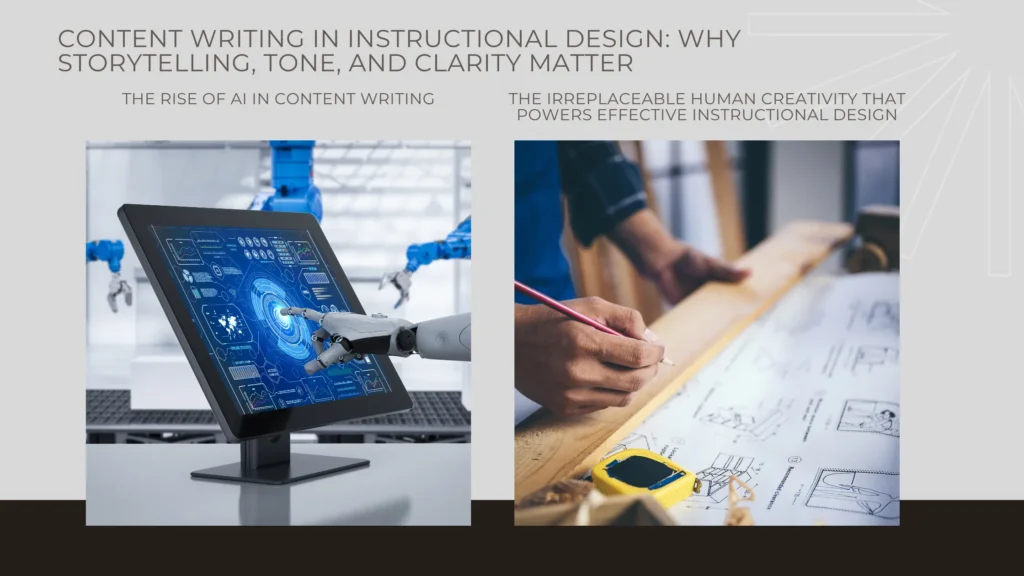
Artificial intelligence is everywhere. Software such as ChatGPT, Grammarly, and Google Gemini are used by more than a billion people every day. Naturally, content writing has been affected the most by this digital revolution.
Why would an employer pay ₹20,000 a month for eight hours of daily effort when AI can churn out grammatically perfect, imaginative, and conceptually tight articles in seconds for free?
At first glance, it seems there’s no competition. But that’s not true. The real challenge doesn’t come from AI itself, but from writers who combine their own skills with AI suggestions, using the tool as an assistant rather than a replacement. This combination can produce authentic, engaging prose that machines alone cannot deliver.
ChatGPT can generate factual, knowledgeable, and pseudo-emotional articles by scanning the internet within minutes. It excels at speed and efficiency. Yet, the human tone of empathy, compassion, originality, excitement, and enthusiasm cannot be replicated by a bot, no matter how many times one tries to humanize its output.
Content writing is more than just words it’s about creating connections. Readers don’t just want information; they want to feel understood, inspired, or motivated. This is where human creativity shines. Seasoned readers can always tell the difference between AI-generated scripts and organically created pieces. That’s why the future of writing belongs to those who merge creativity with technology.
Instructional design is the art of making complex learning simple and easy to understand for students. At its core, it relies heavily on powerful content writing.
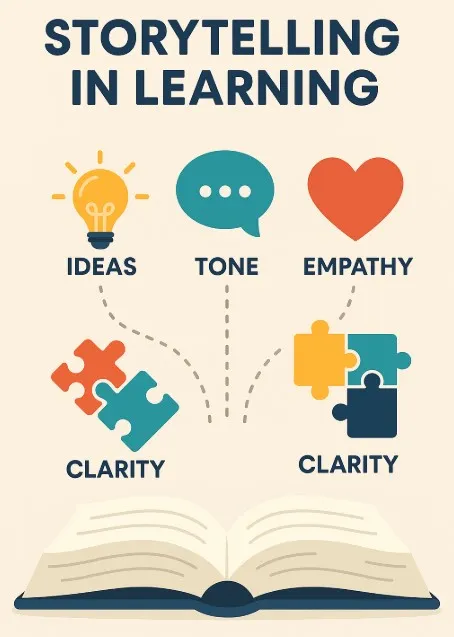
Good content writing bridges the gap between curriculum goals and learner understanding. With clarity, tone, and storytelling, it transforms learning materials into actionable knowledge that students can apply in real life. In a classroom or online setting, it is often the difference between engagement and disinterest.
Today, information is available everywhere—YouTube, Facebook, Instagram, podcasts, and online forums. Yet, despite this abundance, people often scroll endlessly without direction, like wanderers in a maze of digital noise. This information overload leaves learners confused and unmotivated.
The tone of teaching is just as important as the content. Students today no longer respond well to rigid, condescending, or punitive methods. Instead, they thrive in environments where learning feels collaborative.

When teachers act as supporters and friends instead of critics, students are more willing to take risks, ask questions, and grow. This dynamic fosters an environment of brotherhood, compassion, and mutual trust. Through content writing that carries this tone, instructional design can break barriers between students and teachers, creating a shared journey of discovery.
Content writing is not just an accessory—it is one of the core pillars of instructional design.It has the power to:
By weaving storytelling, clarity, and tone into every piece, content writing uplifts education and contributes significantly to the growth of India’s literacy rate. In a country where educational diversity is vast, inclusive and well-crafted content ensures that learning remains accessible to all.
Far from being replaced by AI, content writing is becoming more significant than ever. The more it is integrated into instructional design, the more its value and purpose come into focus.
In diverse learning environments, well-written content ensures inclusivity, relatability, and effectiveness. As AI continues to evolve, it is this human element—the ability to tell stories, evoke emotions, and guide learners—that ensures content writing will remain a cornerstone of education.